L'Enfant Cachée (2026 — Monastere de Segries, Creative Castle Residency)
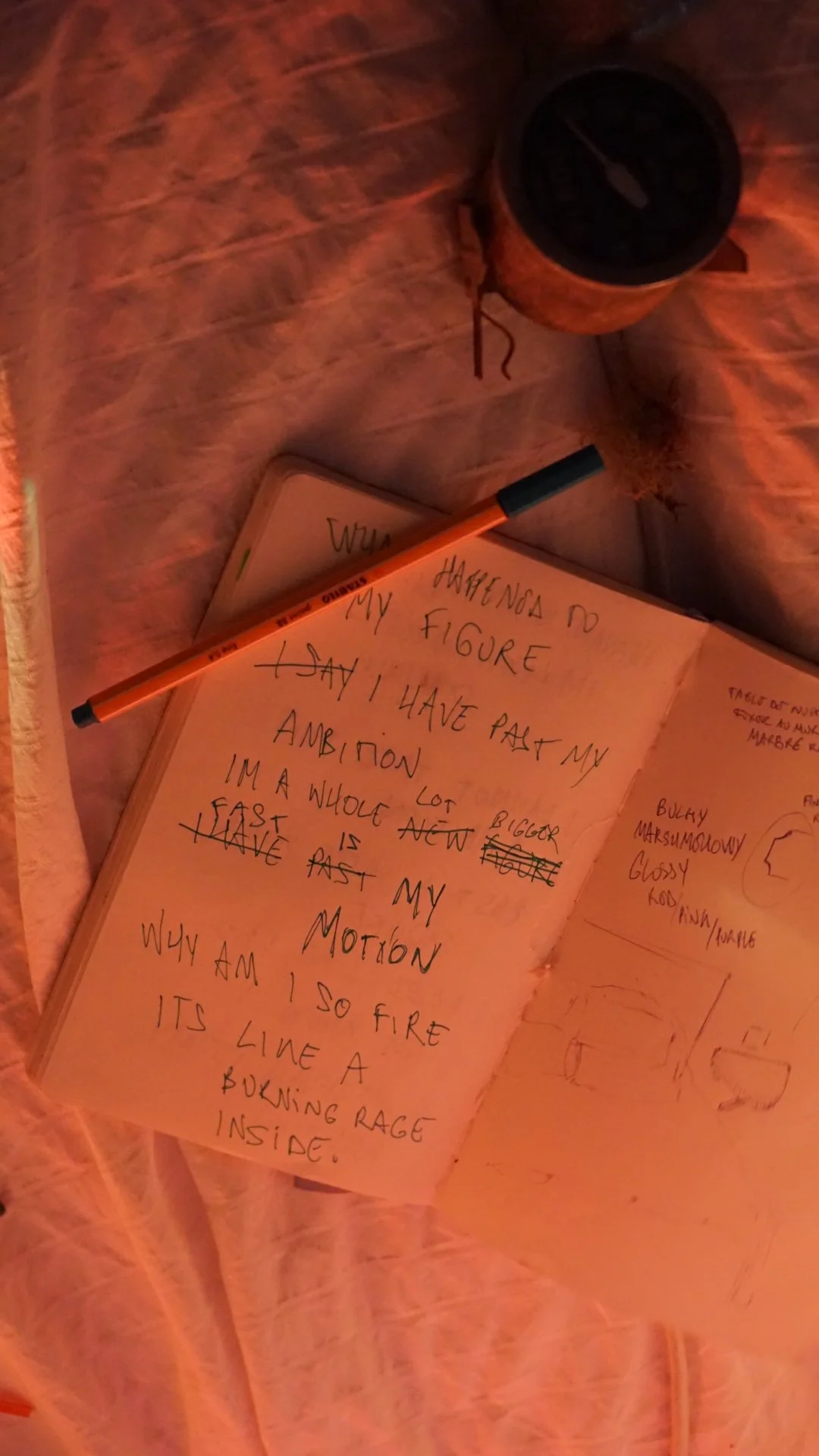
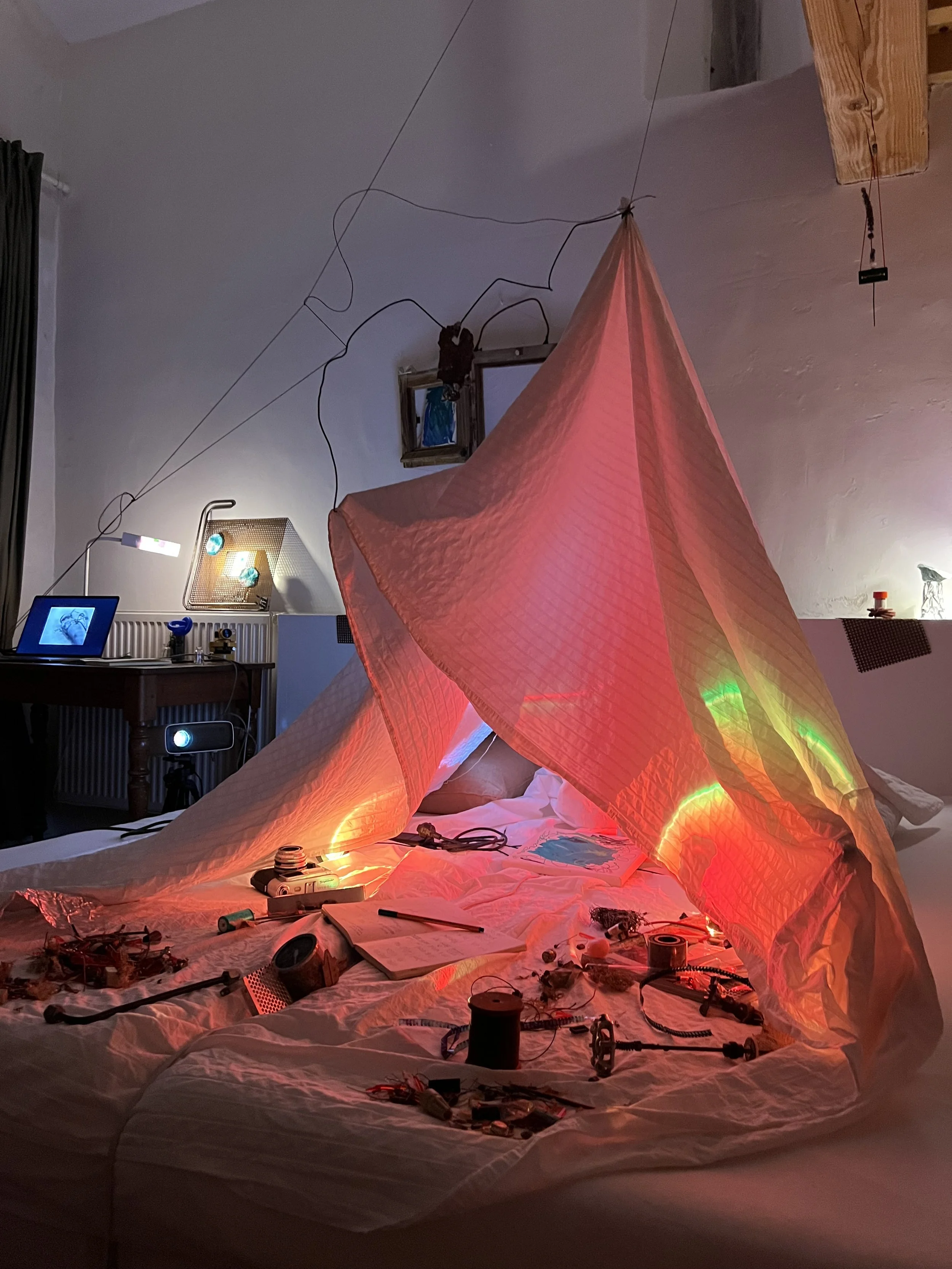
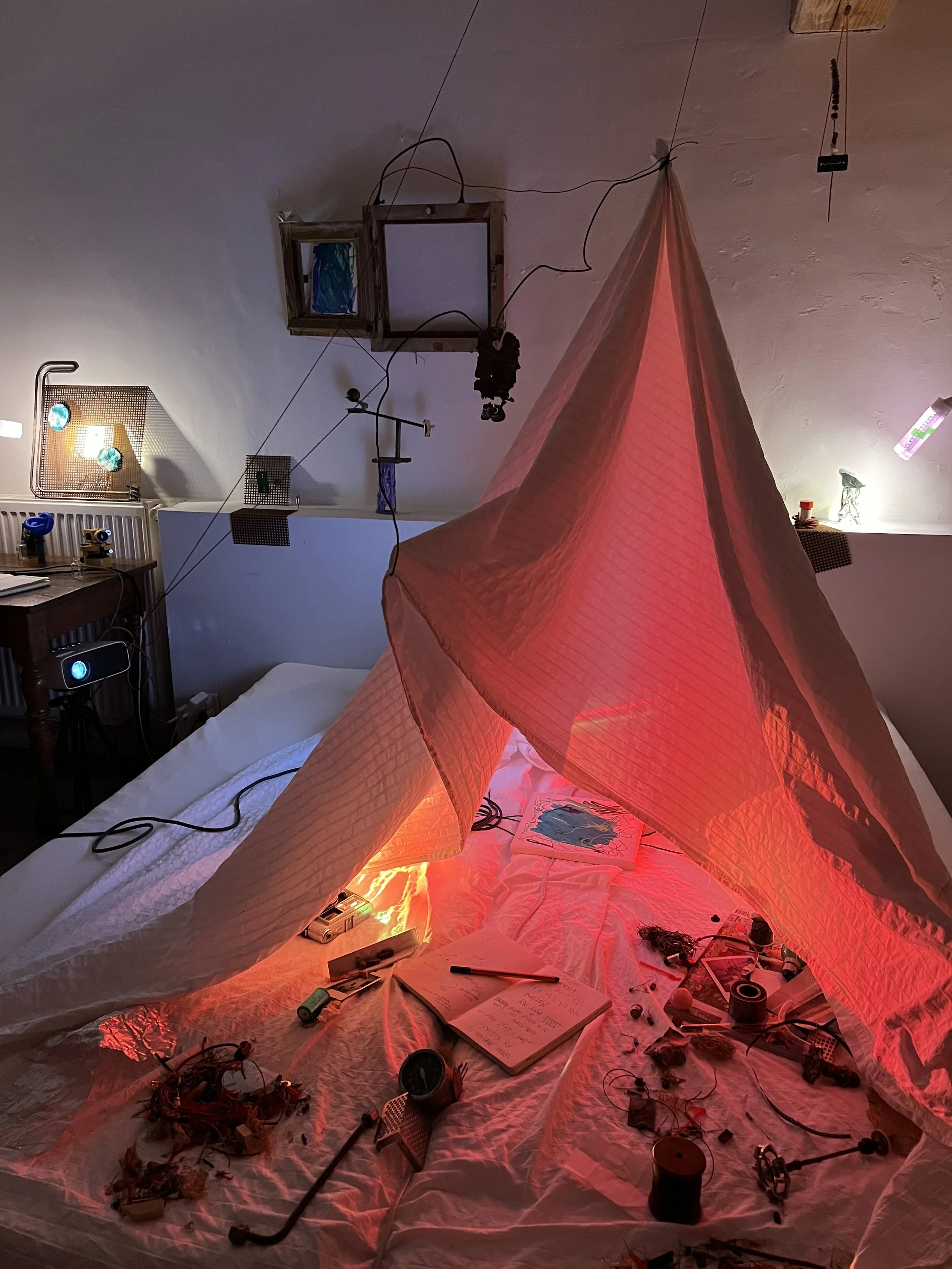
*L'Enfant Cachée* did not begin as an exhibition. I first transformed my own room in order to inhabit it, to feel protected there, and to reopen boxes that had stayed closed for years; the installation was born of a real necessity before it became a public work. It was the gaze of visitors that tipped a living space into an artwork — raising, quietly, the question of when an intimate place becomes a work at all: my intention, the look of others, or the intensity of what has been deposited there.
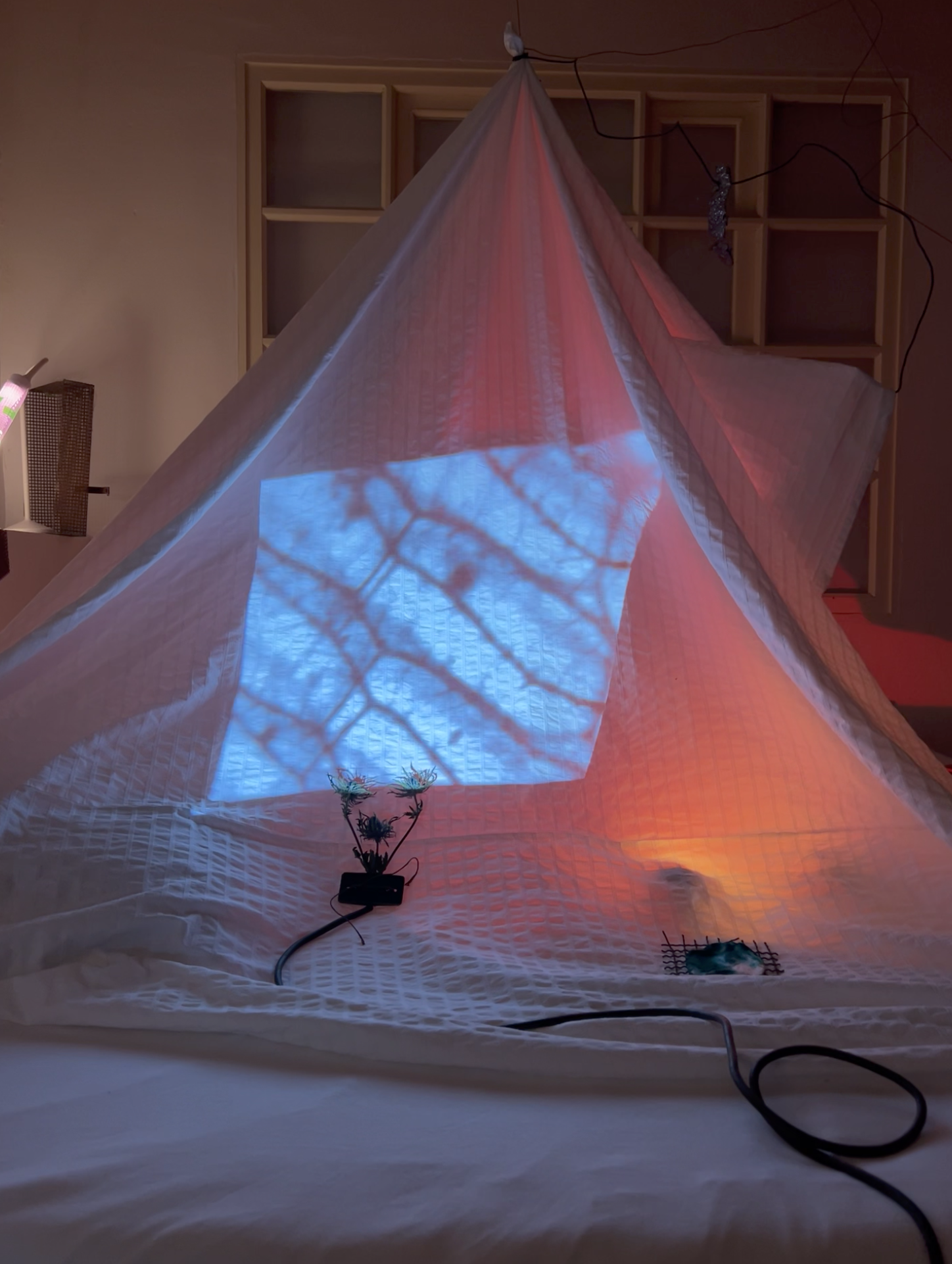
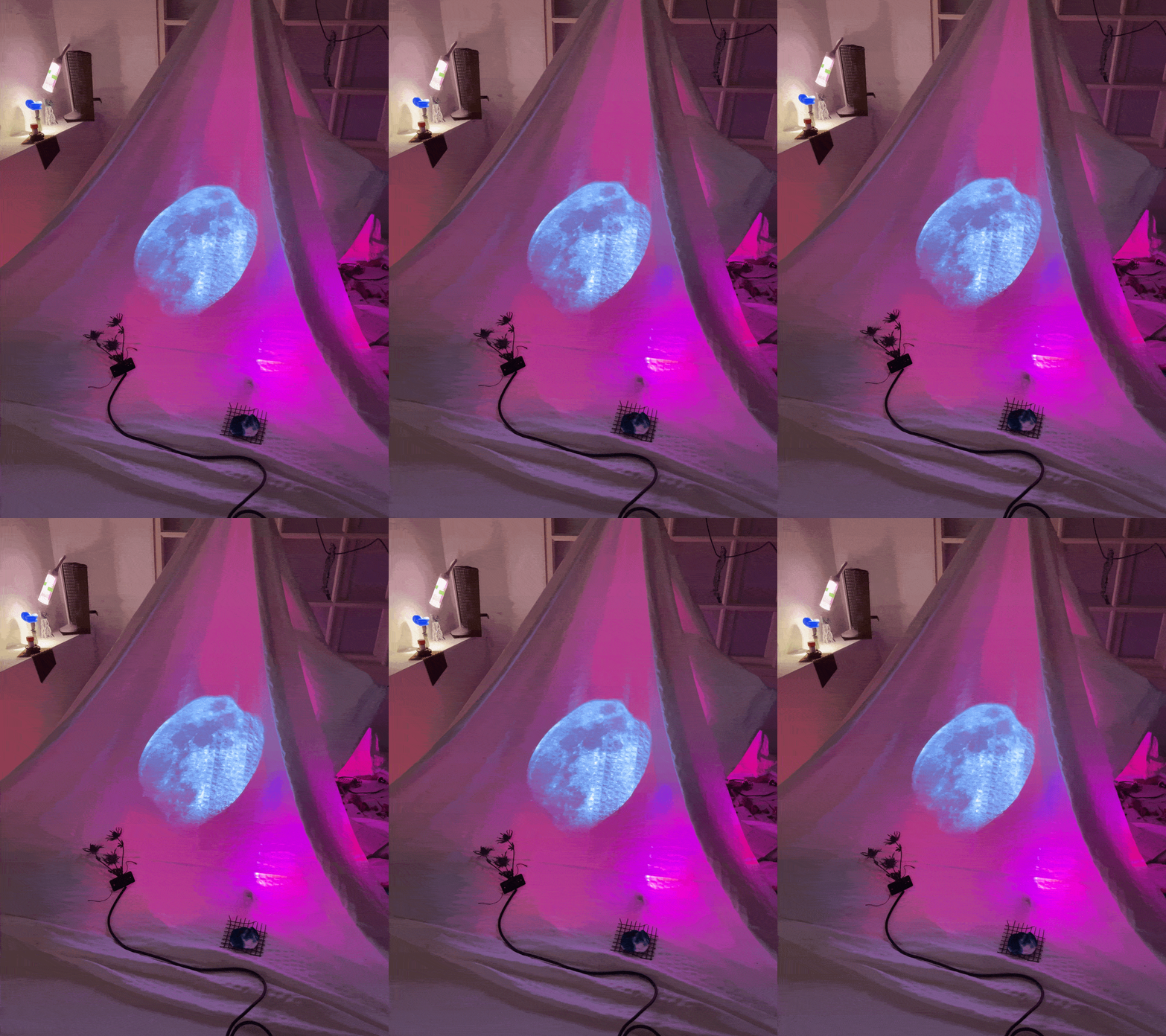
A tent built from sheets summons the huts of childhood — a fragile, improvised world inside the adult one. The hidden child never appears, yet the whole room is organised around its presence; as elsewhere, an invisible centre produces visible effects, except that here the centre is a buried part of myself reorganising space in order to exist safely. The projection of *L'Itinéraire de pensée* onto the tent is exact: the fabric becomes at once shelter, skin and screen, and images from my past circulate across the surface of the space that protects me — an interior made perceptible without being fully exposed, a balance between vulnerability and protection. A fan introduces an invisible breath that moves the membrane, and the emptiness stops being an absence: it becomes a space inhabited by memory and by the viewer's projection. The work marks a turn for me — the discovery that opening what had been closed, and letting others enter it, could itself be the material.